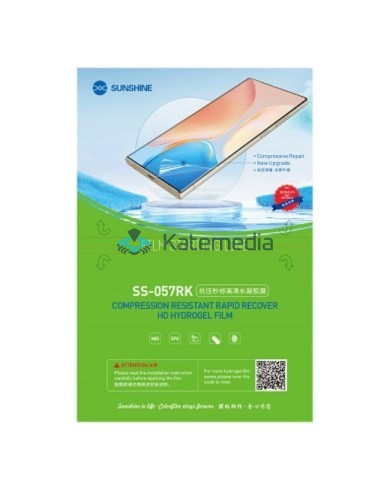
High Hardness protective foil RELIFE GF-7HS Privacy 7H 25 pcs

High Hardness protective foil RELIFE GF-7HS Privacy 7H 25 pcs

Relife GF-7HS High Hardness Privacy HD Screen Protector (25 pcs)


RELIFE GF-7HS is a High Hardness 7H Privacy screen protector that combines enhanced surface durability with privacy protection. Its 7H hardness rating offers superior protection against scratches, scuffs, and signs of daily wear, while the smooth, rigid surface provides a "glass-like" feel during use. The Privacy variant limits screen visibility from side angles, ensuring greater discretion when using the device. The film is designed to be cut using Sunshine C4 series plotters, allowing for a precise fit for specific device models.

zł339.99
Tax included

Volume discounts

Quantity Unit discount You Save
2 zł5.00 zł10.00
5 zł7.00 zł35.00
10 zł10.00 zł100.00
Product availability Product available
Delivery options Learn more
Description
Product details

Relife GF-7HS High Hardness Specifications

Manufacturer Relife
Model GF-7HS
Film variant Privacy HD
Material PET
Thickness ~ 0.42 mm
Size 125 × 196 mm
Package 25 pcs.
Top-ups No

How does High Hardness film work?

High Hardness protective film offers a balance between traditional hydrogel film and tempered glass. It combines the ability to precisely adapt the material to a specific device model with a harder and more resistant surface that provides a more glass-like feel during everyday use.

The 7H hardness surface provides increased resistance to scratches, abrasions and marks caused by everyday use of the device. Compared with standard soft protective films, the material is stiffer, smoother and less prone to developing fine scratches, helping it maintain its appearance for longer.

The increased hardness provides a more glass-like feel when using the screen, while retaining the key advantage of materials designed for cutting plotters — the ability to prepare protection precisely matched to a specific device model.

RELIFE GF-7HS

High Hardness 7H Privacy – harder protection and greater privacy

RELIFE GF-7HS is a specialist High Hardness Privacy protective film that combines increased surface hardness with additional privacy protection. A hardness level of 7H provides greater resistance to scratches, abrasions and marks caused by everyday use of the device.

Each film sheet features a QR code that is scanned by a compatible cutter before the cutting process begins. Based on this code, the device automatically identifies the film type and selects the appropriate cutting parameters, including blade pressure. This means there is no need to manually adjust the settings for a specific material, making the film preparation process faster, easier and more repeatable.

The Privacy variant limits the visibility of displayed content when the screen is viewed from an angle. The person using the device directly from the front retains good image visibility, while the screen content becomes significantly less visible to people standing or sitting to the side. This solution provides greater privacy when using a phone on public transport, in the office, in waiting rooms and in other public places.

The increased hardness makes the film surface less prone to quickly developing fine scratches and signs of wear than traditional soft protective films. The material has a stiffer and smoother feel, which provides a more tempered-glass-like experience during everyday use.

The film surface has also been designed with everyday comfort in mind. Hydrophobic and oleophobic properties help reduce the visibility of fingerprints, greasy marks and other dirt, while the smooth structure provides comfortable finger movement across the screen.

RELIFE GF-7HS is designed for use with Sunshine C4 series cutters. The required protector shape can be prepared precisely for the selected device model, allowing the film to combine High Hardness 7H and Privacy properties with the ability to cut screen protection precisely on demand.

The combination of 7H hardness, increased scratch resistance, a more “glass-like” surface feel and Privacy technology makes the RELIFE GF-7HS suitable for users who expect both durable screen protection and greater discretion when using their device.

Key features

What makes the RELIFE GF-7HS different?

7H hardness

The High Hardness surface reaches a hardness level of 7H, making it more resistant to scratches and abrasions than standard soft protective films. This helps the surface maintain its appearance for longer during everyday use of the device.

Increased durability

The harder material structure reduces the film's susceptibility to fine scratches, marks and surface wear. As a result, the GF-7HS provides more durable protection for users who expect greater resistance than traditional soft protective films.

Structure

The increased hardness makes the surface stiffer and smoother, providing a more tempered-glass-like feel when using the screen. At the same time, the film retains the ability to be precisely cut to match a specific device model.

Privacy protection

The Privacy variant limits the visibility of displayed content when the screen is viewed from an angle. A user looking directly at the device retains good image visibility, while people positioned to the side have significantly reduced visibility of the content shown on the screen.

Film features

Privacy — greater privacy when using your screen

The Privacy variant is designed for users who want to reduce the visibility of content displayed on the screen to people nearby. When viewed directly from the front, the image remains clearly visible, while its visibility becomes significantly reduced as the viewing angle increases.

Combined with High Hardness 7H technology, the Privacy variant offers not only greater discretion, but also a harder and more resistant surface than standard soft protective films. As a result, the RELIFE GF-7HS combines privacy protection with increased resistance to scratches, abrasions and signs of everyday use.

Next-generation protection

High Hardness — harder protection tailored to the screen

High Hardness film combines increased surface hardness with the ability to prepare protection precisely for a specific device model. It provides a solution between traditional hydrogel film and tempered glass — offering a more resistant, more “glass-like” surface while retaining the advantages of an on-demand film cutting system.

7H

Harder surface

A hardness level of 7H increases surface resistance to scratches, abrasions and marks caused by everyday use of the device.

Tailored to the device model

The required film shape is prepared by a compatible cutter specifically for the selected phone model, allowing the protection to be precisely fitted to the screen.

More glass-like feel

Increased hardness gives the surface a stiffer and smoother feel, so during everyday use the film provides a more glass-like experience.

Less stock required

Instead of keeping a separate protector for every model, you can use universal sheets and prepare the correct shape only when the service is being carried out.

Key benefits

What are the benefits of hydrogel film in everyday use?

Hydrogel film does more than protect the surface of the screen. Its properties also improve everyday comfort, the appearance of the device and the ability to adapt the protection to different types of screens.

01

Protection against everyday scratches

The film creates an additional protective layer that helps protect the screen against minor scratches, abrasions and marks caused during normal everyday use of the device.

02

Natural and comfortable operation

The thin construction helps maintain comfortable use of the touchscreen. The film does not create a thick layer and, when applied correctly, remains a discreet part of the device.

03

Good surface coverage

The flexible material can closely follow screens with rounded edges and more demanding shapes, providing a clean and aesthetic finish.

04

Different finish options

Depending on your needs, you can choose Clear, Matte, Privacy and other film variants offering different surface finishes and additional practical properties.

05

Protection for many types of screens

The appropriate film size and a compatible cutter make it possible to prepare protection not only for smartphones, but also for smartwatches, tablets and other devices equipped with a screen.

06

Film prepared exactly when you need it

The required shape can be cut from a universal sheet only when the service is being carried out. This makes it possible to support many different device models without having to keep a ready-made protector in stock for each one.

Installation guide

How to correctly apply High Hardness film

High Hardness films designed for the Sunshine C4 series are applied using a dedicated positioning device. Proper preparation of the film and the phone allows the material to be aligned precisely with the screen and reduces the risk of it shifting during application.

1

Cut the film using the “Traceless film” option

Select the appropriate device model on the cutter and, before starting the cutting process, enable the “Traceless film” option. This is very important, as in this mode the cutter will create additional holes required later to attach the film to the positioning device.

2

Prepare the phone screen

Thoroughly clean the screen to remove dust, greasy marks and other dirt. The surface should be clean and dry so that no particles or visible contamination remain underneath the film after application.

3

Place the phone and select “Release Clamp”

Place the phone in the positioning device, then select the “Release Clamp” function. This allows the phone to be positioned correctly and placed in the proper location before attaching the film.

4

Remove the bottom protective layer

Remove the bottom protective layer from the prepared film. This layer must be removed before attaching the film to the positioning device.

5

Attach the film to the positioning device

Use the holes previously prepared by the cutter to attach the film to the appropriate pins on the positioning device. This ensures that the film is placed in the correct position relative to the previously aligned phone.

6

Apply the film using the squeegee

Once the phone is correctly positioned and the film is secured, begin the application. Move the squeegee from the centre towards the outer edges using a smooth and even motion, gradually pressing the material onto the screen surface. The positioning device keeps the film in the correct position, making it easier to achieve an even and precise application.

7

Finish the installation

Once the entire film has been applied, carefully remove the phone from the positioning device. Check the alignment of the film, firmly press the material around the edges and finally remove the outer transport layer.

Important: before cutting film intended for use with the positioning device, always enable the “Traceless film” option. Without this option, the cutter will not create the holes required to correctly attach the film to the positioning device.

Film materials and characteristics

What are protective films made of?

The base material and applied technology affect the flexibility, fit, durability, hardness and surface characteristics of the film. Different solutions may vary in their properties and intended applications.

EPU

EPU — high flexibility and excellent fit

EPU is one of the most advanced materials used in hydrogel films. It offers excellent flexibility and very good adhesion.

TPU

TPU — flexible and durable material

TPU offers very good flexibility and resistance to everyday use. It adapts better than more rigid materials and provides an excellent balance between high quality and price.

TPH

TPH — greater stability and resistance

TPH provides a solution between soft hydrogel films and more rigid materials. It offers good stability and surface resistance.

PET

PET — clarity and durability

PET focuses primarily on good transparency and mechanical durability. It provides protection with minimal impact on image quality and offers a very smooth surface, although it is less flexible than typical hydrogel materials.

PVC

PVC — economical and easy to apply

PVC is one of the simpler and more budget-friendly materials. It is usually slightly thicker and easier to apply, but offers lower light transmission and less flexibility than higher-grade materials.

UV

UV — cured with ultraviolet light

UV film features high surface hardness, providing good resistance to scratches and everyday wear. UV light curing technology helps achieve a precise fit to the screen.

Why choose High Hardness film?

High Hardness film offers a balance between traditional hydrogel film and tempered glass. It retains the ability to precisely adapt the protection to a specific device model, while providing a harder and more resistant surface with a more glass-like feel.

A surface hardness of 7H increases resistance to scratches, abrasions and signs of everyday use. As a result, the film maintains its appearance for longer while still being cut precisely for a specific device model, providing greater fitting flexibility than ready-made glass protectors.

✓ 7H hardness ✓ Increased scratch resistance ✓ More glass-like surface ✓ Cut for a specific device model
Product Details
SRFHHGF7HS
8 Items
Reviews(0)

No customer reviews for the moment.

You need to be logged in or create an account to give your appreciation of a review.

Sign in

Megamenu

Compare0My Wishlist0

Your cart

There are no more items in your cart

Cookies

Cookie information

This site uses first party cookies to give you the best experience on our site. We also use third party cookies to improve our services, analyze and then display advertisements related to your preferences based on the analysis of your browsing behavior.

Cookie management

About Cookies

Cookies are small text files that are saved on your computer or mobile device by the websites you visit. They are used for a variety of purposes, such as remembering user login information, tracking user behavior for advertising purposes, and personalizing the user's browsing experience. There are two types of cookies: session and persistent. The former are deleted after the end of the browser session, while the latter remain on the device for a certain period of time or until they are manually deleted.